Passive fire protection
The parts of a building that hold a fire back without anyone pressing a button.
- Every seal labelled and photographed
- BM TRADA / FIRAS-certificated contractors
- Written price before any work
Alarms, sprinklers and extinguishers are active. Something has to detect the fire or someone has to use them.
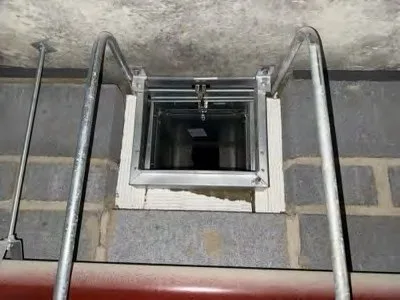
Passive fire protection just sits there. A blockwork wall rated for 60 minutes. A concrete floor. A fire door that closes itself. The seal round a pipe. Coated steel. A fire damper in a duct. None of it does anything until there is a fire, and then all of it has to work at once.
The part we do
Our work is the sealing between and inside those elements:
Penetration seals round pipes, cables, trays and ducts where they pass through fire walls and floors.
Linear joints, such as the gap at the head of a blockwork wall under a slab, or the movement joint between two walls.
Cavity barriers in ceiling voids, roof spaces and under raised floors.
Compartmentation surveys and inspections of existing seals.
All installation is carried out by our BM TRADA / FIRAS-certificated contractors.
The parts we do not do
Fire doors are a separate trade, and a fire door inspection is a separate service from fire stopping. Fire dampers inside ductwork belong to the ventilation engineer. Intumescent paint on structural steel, fire-rated board systems on columns and fire-resisting glazing are all specialist work of their own. If our survey finds a problem with any of them, it goes on the report so you can get the right people in.
Why it gets damaged
Passive protection is easy to break and hard to notice. A plumber cuts a hole for a new pipe. An electrician pulls a cable through a seal. A shopfitter screws a sign through a fire board. Each one is a small job, and nobody goes back to close the wall.
That is why most of our work is in buildings that were sealed properly once.
Send the postcode, the type of building and a photo with a tape measure in it. We will come back with what it needs and a rough price.